
REFT Africa
Our team
REFT Africa brings together evaluators, researchers and teachers whose combined experience exceeds one hundred years. Here are the people who lead our assignments.
Leadership
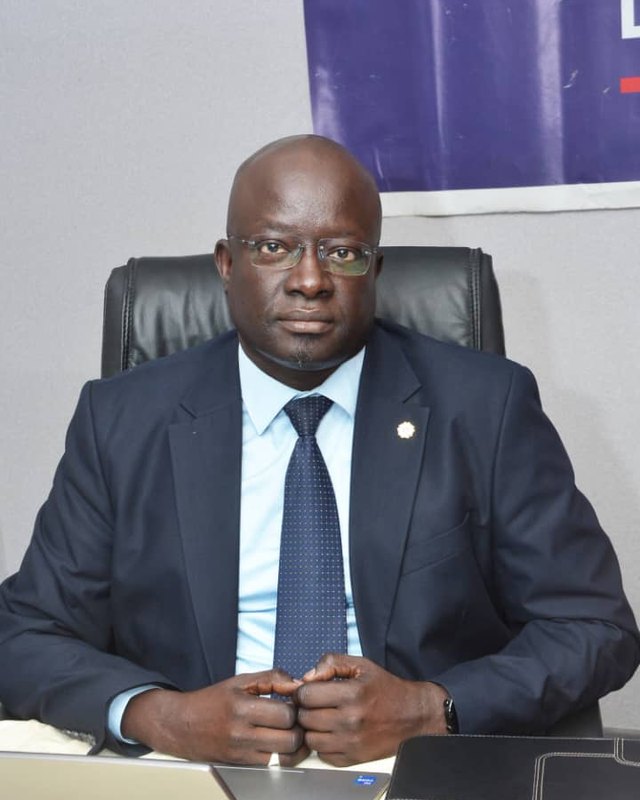
Baitir Ndoye, Ph.D.
Director, REFT Africa — Africa Division of The REFT Institute, Inc.
Senior monitoring & evaluation expert · Professional evaluator (AEA) · PEFA certified
More than thirty years of experience in international development, research and evaluation, across an unusually wide range: agriculture and food security, early warning systems, public health and HIV/AIDS, education, local governance, public finance.
A programme manager across both anglophone and francophone Africa, he has built lasting working relationships with governments, donors and partner NGOs. A native speaker of French, Lebu and Wolof, he works fluently in English. He reads and writes German, a language he works in on the page rather than in conversation.
Qualifications: Baccalauréat, Science stream (Prytanée militaire Charles N'Tchoréré) · Agricultural Engineer, rural economics (ENSA, formerly INDR) · Ph.D. in research methods and statistics, specialisation in evaluation and public policy.
Designer and developer of the MELR platform
Baitir Ndoye single-handedly designed and built the entire MELR platform — from the architecture and data model through to the trilingual web application, offline mobile collection, KoboToolbox, ODK and DHIS2 integrations, the evaluations suite and exports in donors' formats.
A rare ability to cover the whole chain: M&E expertise, data engineering and software development in one person.
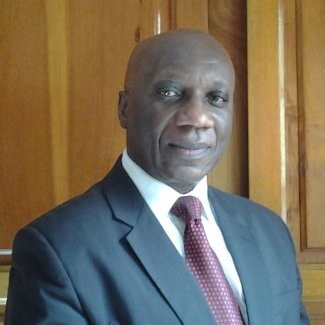
Michael W. Bassey, Ph.D.
Technical Director, REFT Africa
Senior research and development expert · More than 40 years of experience · Ph.D. in mechanical engineering
Forty years of agricultural research and programme management, across three continents. At Canada's International Development Research Centre (IDRC), based in the Dakar regional office from 1982 to 1995, he managed up to forty simultaneous R&D projects across most of the twenty-four countries of West and Central Africa, and introduced participatory research approaches, gender analysis and rapid rural appraisal techniques to the region.
As Director of International Cooperation at IITA in Ibadan (1996-1999) he led three programmes and oversaw a training strategy covering more than one hundred and fifty Ph.D. and M.Sc. students. He went on to serve as Director of International Programs at the Rodale Institute (1999-2002), then as Regional Representative for ILRI's West Africa programme (2004-2005). His recent consultancies cover post-Ebola recovery in Guinea, Liberia and Sierra Leone for CORAF and the World Bank, and the strategic plans of CILSS.
He joined REFT Africa in 2016 as senior technical adviser. He provides overall technical direction, designs sub-projects — work plans, budgets, schedules, evaluation criteria — and backstops the expert teams deployed on assignments. Author of more than fifty publications on participatory research, post-harvest systems and renewable energy. A native English speaker, he works fluently in French.
Qualifications: Ph.D. in mechanical engineering (Queen's University, Canada) · M.Sc. in mechanical engineering (Queen's University) · B.Sc. Honours in mechanical engineering (Queen's University). Former Head of the Department of Mechanical Engineering, Fourah Bay College, University of Sierra Leone.
Associate experts
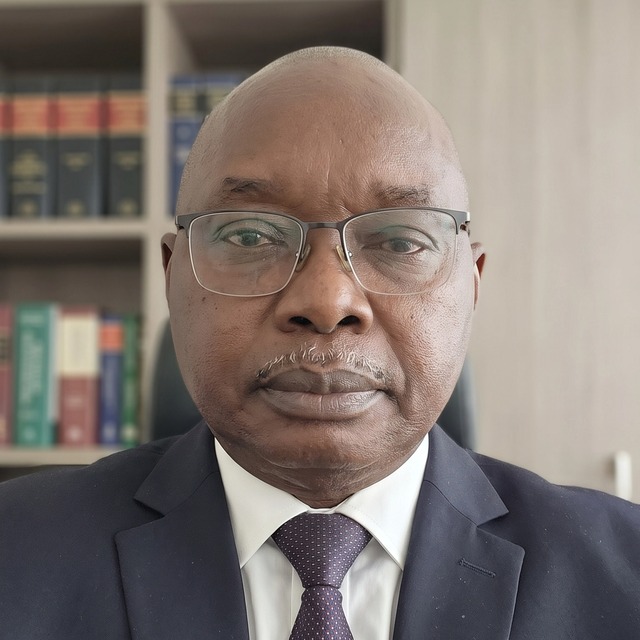
Prof. Saliou Ndiaye
Senior expert in agronomy and environment
Full professor (CAMES) · Agroecology, plant protection and biodiversity
Thirty-eight years of agronomy, entomology and applied ecology. A teaching researcher at the École nationale supérieure d'agriculture from 1985 to 2023, he headed its applied entomology and zoology laboratory, its crop production department and then its academic affairs. Full professor of the CAMES since 2019.
In the field, he has led the environmental and social impact assessments of several of Senegal's largest infrastructure and agribusiness projects: structuring works in the Senegal River delta for MCA-MCC, environmental and social management frameworks for PDIDAS and PAFA for the World Bank, and PREFERLO. For IFAD he authored the study of the agricultural potential of Senegal's agroecological zones that shaped the 2019-2024 COSOP. For ECOWAS he wrote the fruit fly surveillance manuals and trained the focal points of eight countries.
His ornithological work is a reference — the species monitoring plan for Blaise Diagne International Airport, the impact assessment of the Léona-Potou wind farm, a review for the Royal Society for the Protection of Birds. More than one hundred and twenty scientific articles; seventeen doctoral theses supervised and one hundred and fifteen examined. Member of Senegal's National Academy of Sciences and Technology and chair of the board of the African ANAFE network.
Qualifications: Doctorate in life sciences, applied ecology (Université de Pau et des Pays de l'Adour) — highest honours with the jury's commendation · DEA in experimental ecology (Université de Pau) · Agricultural engineer, entomology (Institut agronomique et vétérinaire Hassan II, Rabat) · Specialised certificates in entomology and advanced ecology (Université Paris XI, Orsay).
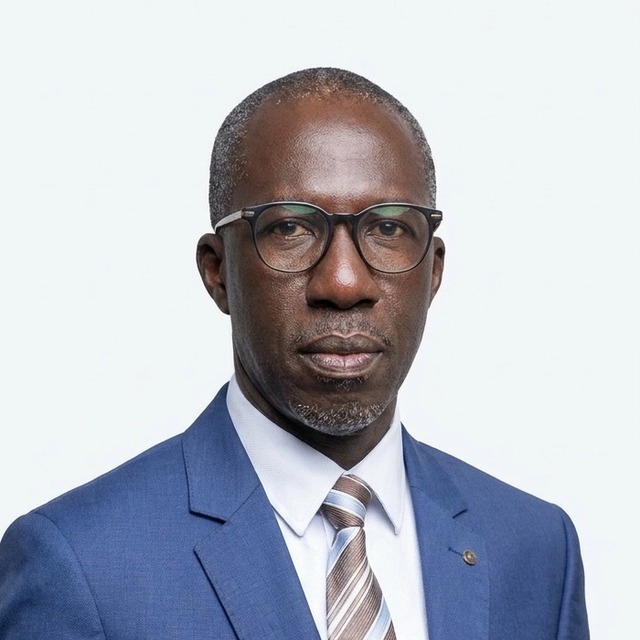
Prof. Alioune Badara Tall
Senior expert in nutrition and public health
Full professor (CAMES), agrégé in public health · Nutrition, child health and IMCI
Twenty-five years designing, planning, coordinating and evaluating public health programmes, with proven command of epidemiological causal analysis and of surveillance system design. A full professor of the CAMES since 2024 and agrégé in public health, he holds a doctorate in public health and a state doctorate in dental surgery from Université Cheikh Anta Diop.
At the Ministry of Health and Social Action he headed the programmes bureau of the Oral Health Division (2006-2013) — planning and monitoring of the national noma control and school health programmes — then the bureau for integrated management of childhood illness (2013-2021), as director of the national IMCI training course and lead for the community-level vitamin A supplementation routinisation strategy. He had previously headed the stomatology department of Ziguinchor Regional Hospital for eight years.
A teaching researcher at Université Alioune Diop de Bambey since 2008, he served as deputy head of its Health and Sustainable Development faculty from 2018 to 2025, responsible for teaching and coordinating the internal review that secured ANAQ-Sup accreditation for three programmes. A senior consultant with REFT Africa since 2016, he manages the firm's nutrition work and contributes across its health programmes. Two recent assignments for the World Health Organization, in 2021 and 2023, on access to assistive technology in Senegal. More than twenty-five articles in peer-reviewed journals.
Qualifications: Full professor (CAMES) · Agrégation in public health (CAMES, Brazzaville) · Doctorate in public health, Ph.D. (Institut de Santé et Développement, UCAD) · Master II in public health, nutrition option (ISED, UCAD) · State doctorate in dental surgery (UCAD) · Baccalauréat, Science stream (Prytanée militaire Charles N'Tchoréré).
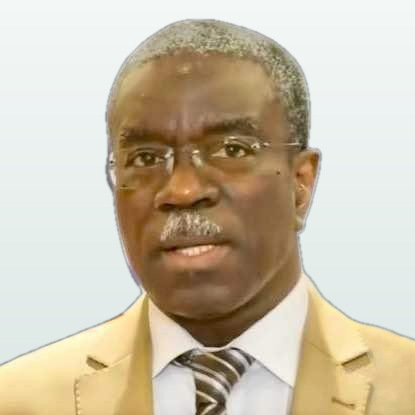
Serigne Amadou Sèye
Senior expert in public finance
Treasury Inspector · Public accounting, budget reform and debt management
Forty-three years of public finance: thirty-four in the senior Senegalese civil service, nine as a consultant. A Treasury Inspector, he graduated from the National School of Administration and Magistracy in 1982 and holds a master's in economics from Université Cheikh Anta Diop.
His administrative career spans Treasury accounting posts — tax revenue, expenditure execution, keeping the public accounts —, the central services responsible for regulation and control, and the office of the Minister of Finance. It also runs through economic diplomacy: financial counsellor at Senegal's embassy in Tokyo, then head of the economic, commercial and tourism bureau in Brussels with the rank of minister-counsellor. He closed it as Director of Public Accounting, then Director of Internal Control at the Directorate General of Public Accounting and the Treasury.
An independent consultant since 2016, from 2022 to 2025 he was deputy chief of party of the USAID-funded public financial management support project implemented by Deloitte, leading its budget component. There he conducted the diagnostic study of the national debt management system, whose December 2024 report sets out the functionality needed to bring Senegal's arrangements into line with international standards. His other work covers the WAEMU and ECOWAS free circulation regime, the extension of the Treasury single account, the procedure manuals of the accounting reform, and the integrated financial management information system.
A teacher and trainer since 1989 at the National School of Administration, at the BCEAO's West African Training and Banking Studies Centre, at UCAD and at the Institut supérieur de finance, in 2025 he trained senior officials of the Guinea-Bissau administration for the World Bank. Commander of the National Order of the Lion. He authored the March 2023 note on the steering framework for budgetary reforms, and co-authored with the Director of REFT Africa the August 2026 note that extends it — both published in our Analysis notes.
Qualifications: Treasury Inspector diploma (ENAM, Dakar) · Master's in economics, business management option (UCAD) · Diplôme d'études pratiques d'anglais and First Certificate in English.
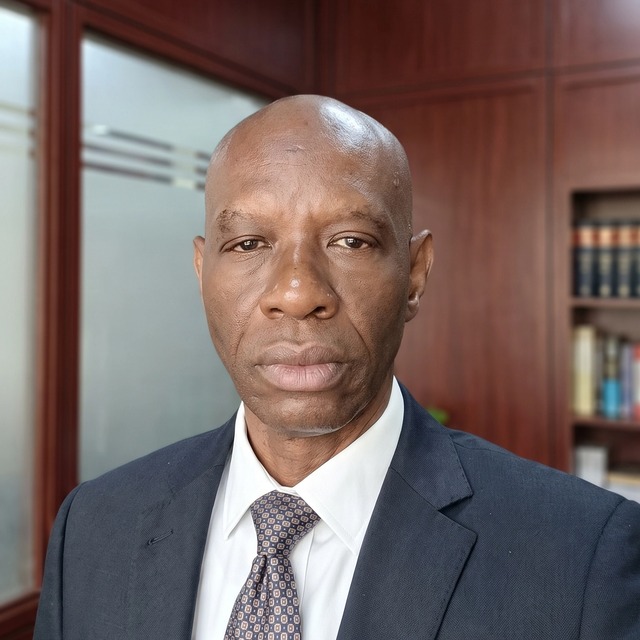
Djibril Ba
Senior expert in natural resource management
Water and Forestry engineer, Colonel (exceptional class) · Forest management, inventory and GIS
Thirty-five years of Senegalese forestry, thirty-one of them within the Water and Forestry administration. He closed that career as head of the mapping and resource assessment unit of the Directorate of Water, Forests, Hunting and Soil Conservation (2015-2020), having previously served as technical adviser to the Director, responsible first for decentralisation and then for forest management and production.
His participatory management work was built in the field: the pilot scheme in the Ndankou classified forest under the Senegalese-German domestic fuels project (1995-2001), then management plans for the Kolda and Tambacounda regions for PROGEDE (2001-2008) — inventories, data processing, mapping of forest blocks and facilitation of negotiations with communities.
National focal point for UN-REDD and FAO on forest biomass and database analysis. A visiting lecturer in forest inventory and management at ENSA Thiès and ENEA Dakar since 2009, he has supervised around one hundred trainees and several doctoral candidates.
Qualifications: Post-graduate specialisation diploma (ENGREF, Montpellier) · General agronomy diploma (INDR, Thiès) · Specialised training in geomatics (Quebec), in databases and GIS for forest inventory (Gembloux) and in forest biomass (UN-REDD/FAO, Ghana).
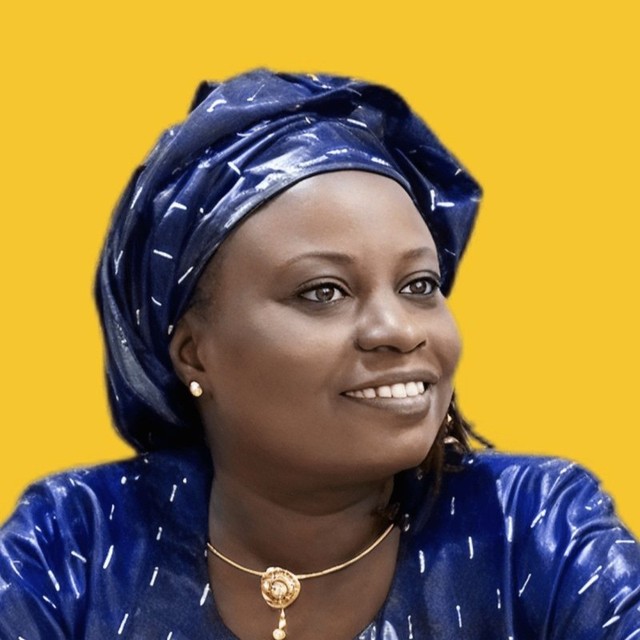
Maïmouna Ndoye, Ph.D.
Senior expert in gender and development
Lawyer and doctor of development studies (IHEID, Geneva) · More than 25 years of experience
Twenty-five years of gender and development work, built on an uncommon double training: a lawyer from Université Cheikh Anta Diop, then a doctor of development studies from Geneva's Graduate Institute of International and Development Studies. She works on gender analysis and gender audits, gender-responsive strategic planning and budgeting, the institutionalisation of gender in public policy, and social and behaviour change communication.
Her career has been built with United Nations agencies, multilateral donors and civil society. As FHI 360's gender technical adviser for the HIV and tuberculosis component of USAID's health programme (2012-2016), she led the development of Senegal's national Gender and HIV policy. At IntraHealth International, on the USAID/Neema project (2016-2020), she supported implementation of the Ministry of Health's gender institutionalisation plan. For the Global Fund she carried out the gender diagnosis and gender-responsive planning of the HIV-tuberculosis grant in the Democratic Republic of Congo. She then coordinated the regional project "Young Feminists in West Africa" and served as gender and feminist approaches lead at Equipop (2020-2025).
At REFT Africa she holds a cross-cutting role attached to the Health department: conducting gender analyses and audits, embedding gender in technical proposals, projects and evaluations, developing gender-responsive methodological tools and budgets, and building the capacity of teams and partners.
A teacher and researcher: she has taught the "Family and Gender" course at Université Cheikh Anta Diop since 2017 and has contributed since 2007 to the Graduate Institute's distance learning programmes in gender and development. Author or co-author of some fifteen scientific publications issued between 2000 and 2023.
Qualifications: Doctorate in development studies (IHEID, Geneva) · Inter-faculty DEA in gender studies (Universities of Geneva and Lausanne) · DEA in development studies (IHEID) · Master's in private law, judicial option (UCAD, Dakar).
Mame Awa Fall
Expert in monitoring, evaluation and geographic information systems
Survey supervisor · Fifteen years of experience · Doctorate in project management under way
Fifteen years of monitoring, evaluation and geomatics, eight of them heading the M&E and GIS service of Senegal's emergency programme for the modernisation of border areas and corridors (2017-2025). There she built the integrated monitoring systems and the programme's GIS portal, maintained the priority action matrix, produced quarterly and annual performance reports and trained the heads of zone offices, across the country's ten border regions.
Previously, technical assistant in FHI360's strategic information unit for USAID-Senegal (2012-2016): regional analysis and mapping of HIV/AIDS vulnerability across eight regions, design of collection instruments and databases, ArcGIS training for implementing partners and data quality assurance. For the OASYS consultancy she mapped development partners' health and vocational training interventions and brought the Ministry of Health's health system strengthening platform into operation.
She has led fieldwork in all fourteen regions of Senegal, with detailed knowledge of the border areas with Mali, Guinea, Guinea-Bissau, the Gambia and Mauritania. Four academic publications. Member of the Senegalese Evaluation Association, the Senegalese Association of Geomatics Professionals and the African Network of Geomatics Professionals.
Qualifications: Doctorate in project management under way (FUNIBER) · MBA II in project management (ISM, Dakar) · Master II in monitoring and evaluation of projects and programmes (ESMP, Dakar) · Master II in territorial planning, decentralisation and local development (UCAD) · Certificate in data analysis for sustainable development planning (IDEP).
Areas of expertise
- Programme evaluation
- Impact evaluation
- Ex-ante appraisal
- PEFA assessment
- OECD-DAC criteria
- Monitoring and evaluation systems
- Public policy analysis
- Nutrition and child health
- Quantitative and qualitative methods
- Geographic information systems
- Environmental and social impact assessment
- Agronomy and plant protection
- Natural resource management and forest planning
- Capacity building
Professional affiliations
- American Evaluation Association (AEA)
- Senegalese Evaluation Association (SENEVAL)
- American Economic Association
- Senegalese Association of Agricultural Engineers (ADENSA)
- National Academy of Sciences and Technology of Senegal (ANSTS)
- African ANAFE network (ICRAF)
- Senegalese Association of Geomatics Professionals (ASPG)
- African Network of Geomatics Professionals (RAPG)
Let's work together
Planning an evaluation, a baseline study or the design of a monitoring system? Let's talk.